
Regional Reports 2026
North Central British Columbia
Marcie Lundin, Northern Lights College

Service area, campuses and delivery model:
At the Northern Lights College, we cover more than 325,000 square kilometers between all campuses. Our main campuses are in Dawson Creek and Fort St John where we offer classes Advanced and
Provincial classes via video conference, HyFlex and online as well as face-to-face intermediate and fundamental classes. We have many satellite campuses spanning northern BC including Chetwynd, Fort Nelson, Tumbler Ridge plus access centers in Atlin, Dease Lake, Doig River and Halfway River. Most remote campuses offer the face-to-face fundamental and intermediate courses with additional support for the HyFlex and online courses. The Chetwynd and Fort Nelson campuses can dial into the video conferenced classes as well.
Covering such a vast area of British Columbia requires flexible and responsive models. Our program is constantly adapting our delivery in order to meet the needs of as many students as possible. Our models ensure equitable access to ABE regardless of location which also supports balancing work and family commitments for our students.
We offer many ABE courses through our Career and College Preparation Program. For provincial and advanced courses, we offer Math, Physics, Chemistry, Biology, English, Computer Studies, Education and Career Planning, Essential Skills for the Trades, and Social Studies in a variety of models. For fundamental and intermediate courses, we offer Computer Studies, Math, English, General Science and Essential Skills for the Trades.
Recent changes in the area/institution:
Our access center in Halfway River is a new and exciting addition to the college through the Career and College Preparation Program where we can increase access and support to the remote community which is approximately 2 hours from any full NLC campus. Our Dawson Creek campus has recently started a new English as a Second Language course which was previously only offered in Fort St John and has been quite successful. This program was part of a pathways project in order to support students trying to enter into Early Childhood Education and the Trades.
Our program has started shifting our intake model to streamline registration for our students. We have been moving away from using a paper-based placement assessment and towards a concierge model where students are registered into a class where an instructor can assess their skills at the students pace and work with them to determine where their best placement would be. This leads to a faster, more efficient, and more personal registration for our students.
Challenges:
As most institutions we were hit with the decline in international enrollment with the new international student regulations, but we have been able to mitigate these challenges through an increase in domestic enrollment, continued commitment to maintain relationships with other countries, the flexibility of our programming, and a tightened budget.
We recently had a tragic event at our Tumbler Ridge Campus which has caused a temporary closure for our campus which shares a building with the local highschool. This event shook not only our college and northern communities but Canada as a whole, which brought us together to show our true Canadian values. We are working closely with local partners to restore access to services while supporting staff and students during recovery.
Innovations/Successes:
Due to the renewed focus on domestic marketing, and our commitment to increasing access through responsive and flexible programming, our department has seen its enrollment increase by 23%.
Our outreach and collaboration with remote communities such as Doig River, Halfway River, and Atlin have shown such success that we have additional remote communities reaching out to collaborate on ways to offer access to more communities.
Our Essential Skills for the Trades Program is continuously adding more pathways to access a greater number of trades. This is leading to more students being able to use our program as a pathway into their desired trade which is important for the local economy and industries.
Anything else:
Looking ahead over the next year we are aiming to increase accessibility to be able to reach as many students in the region as possible, as well as increasing our course offerings to meet the demand of the students.
Vancouver Island
Tony Trudel, North Island College

Service area, campuses and delivery model:
Across Vancouver Island, ABE (Adult Basic Education) programming is delivered through three institutions with different geographic footprints and delivery approaches. At Vancouver Island University (VIU), ABE is primarily delivered across the Nanaimo and Cowichan campuses. Programming is offered through a mix of daytime, face-to-face cohort classes and continuous intake options. VIU also delivers fully online asynchronous continuous intake options in several subject areas, and it maintains an integrated pathway through the Aboriginal University Bridging Program (AUBP) and a provincially supported Pathways programming model that packages ABE into “pre-program” routes for specific receiving programs.
At Camosun College, ABE is delivered across the Lansdowne and Interurban campuses and through 6 in-community partnerships. Along with in-person delivery, online delivery is described as operating through two distinct models: synchronous and asynchronous delivery. Camosun also delivers in-community Education and Career Planning (EDCP) in two partner Nations: Malahat and Songhees, and it offers an in-person Indigenous College Prep program at WSANEC College. ABE is not described as being delivered at the newly opened John Horgan Campus at this time, but it may in the future.
At North Island College (NIC), ABE is delivered across multiple campuses—Comox Valley, Campbell River, Port Alberni, and Port Hardy—alongside college-wide digital offerings. Delivery is described as largely continuous intake for foundational through advanced English, paired with online asynchronous options and scheduled online synchronous lecture, for some provincial-level offerings. For math, NIC has both face to face in CV and online synchronous semester based advanced/provincial offerings, every other ABE-math course is in continuous entry whether it is online or on campus . NIC also lists science upgrading and a notable set of Indigenous-focused offerings (student skills, First Peoples studies, and Indigenous language programming) as part of its broader access-oriented programming.
Recent changes in the area/institution:
Recent changes across the three institutions reflect an environment of constrained budgets, program review activity, and adjustments in delivery to match staffing and enrolment realities. At VIU (Vancouver Island University), the institution is described as managing a significant deficit and undertaking broad program cancellations has cancelled or suspended most graduate programs as well as some undergraduate and trades programs. Within ABE (Adult Basic Education), leadership time has been reduced compared to prior structures, and foundational English has been paused at the Nanaimo campus to review placements related to English language learning transitions. VIU also adjusted how continuous intake math is organized by splitting into two sections, which enabled additional math pathways to be offered. Faculty restructuring has been proposed at the institutional level and may alter reporting structures for ABE over time.
At Camosun College, ABE continues across levels, but fewer sections are being offered in some areas due to enrolment and budget constraints. All online asynchronous upgrading courses have been canceled this summer. Institutionally, Camosun recently completed a school reorganization (moving from five schools to four), and this was described as, in part, supporting the continuity of access programming. In alignment with the college’s commitment to the Truth and Reconciliation Commission (TRC) Calls for Action, the Indigenous College Prep program is moving toward a licensing/autonomy arrangement with WSANEC College over the coming period. ABE enrollments are also slightly up from last year in contrast to other areas of the college.
At NIC (North Island College), ABE is described as slightly up in enrolment compared to last year too, also in contrast to declines in other areas of the college. NIC is described as operating with an approximate $2 million deficit and completing an expedited program assessment that led to multiple program suspensions; ABE was not among the suspended programs, though some downstream programs that ABE supports were affected. Moreover, ABE at NIC is getting used to not having its own department (or department chair anymore) as this is it’s first year where ABE English is part of the English department and ABE math is part of the Math/Science department. ABE delivery has also shifted over time: digital offerings were high during the pandemic, followed by a period of offering extensive digital and in-person coverage, and then reductions in some online sections and staffing.
Challenges:
Across the region, institutions are balancing the mandate and community demand for ABE (Adult Basic Education) with internal budget constraints, staffing capacity, and evolving delivery expectations. At VIU (Vancouver Island University), a key challenge is operating ABE within a wider institutional deficit and program reduction environment. VIU also anticipates administrative pressure to align continuous intake structures with broader institutional timetabling and standardization practices. There are indications that changes in prerequisites in some receiving programs (e.g., trades and some social sciences) could influence future ABE demand, though the degree and timing are uncertain. VIU also notes potential overlap pressures where credit-bearing developmental courses may be created in other departments, which could affect how developmental learning is positioned institutionally.
At Camosun College, challenges include section viability under tighter budgets, changes in international enrolment, and staffing pressures that include reduced term hiring and retirements. Continuous intake models can complicate enrolment-based planning, as early numbers may not reflect later completions. This can create tension between instructional realities and institutional planning cycles. Camosun also describes differing instructional preferences between delivery models (synchronous versus asynchronous), which may affect consistency in student experience and planning. In-community delivery and Indigenous program transitions require additional coordination and resourcing.
At NIC (North Island College), challenges include sustaining multi-campus in-person delivery while managing cost pressures and staffing availability. NIC also highlights practical barriers related to student technology access and readiness, especially when students rely on digital delivery due to limited local in-person options. In addition, workload intensity and staffing transitions can affect capacity for system-level work such as articulation. NIC’s internal discussions about “access” and how the institution meets provincial expectations are described as evolving, though the operational implications are not yet fully clear.
Innovations/Successes:
Despite constraints, each institution describes areas of stability, program design work, and partnership-based delivery that support adult learners. At VIU (Vancouver Island University), a major strength is the use of Pathways-funded programming to package ABE (Adult Basic Education) into “pre-program” routes with strong relationships to receiving programs, alongside community outreach. VIU also maintains long-standing student navigation support through an embedded student success advisor role. Adjustments to continuous intake math organization have allowed VIU to broaden math pathway options without relying solely on additional staffing.
At Camosun College, innovation is closely linked to partnerships and funded redesign work. Pathways funding is described as supporting faculty continuity and enabling redesign of at least one provincial-level math course into an asynchronous format. Camosun also describes externally supported in-community delivery of Education and Career Planning (EDCP) and upgrading with partner Nations, alongside renewed partnerships. The institutional reorganization that retained a School of Access structure may also support continuity for access programming. The Indigenous College Prep program’s movement toward a licensing/autonomy arrangement is aligned with Indigenous self-determination goals, while also requiring careful coordination.
At NIC (North Island College), strengths include slightly increased ABE enrolments year-over-year and strong demand in some locations, including consistently full in-person programming in Port Alberni. NIC also describes positive outcomes from the return to in-person learning where available. NIC highlights service-model supports adjacent to ABE, including an embedded librarian approach and Career Central collaboration, which can support student persistence and navigation. NIC’s Indigenous language and First Nations-focused programming is described as stable and remains a notable part of its broader access programming.
Anything else:
Across Vancouver Island, a recurring theme is the importance of flexibility in ABE (Adult Basic Education) delivery while institutions operate within changing fiscal and organizational contexts. VIU (Vancouver Island University), Camosun College, and NIC (North Island College) each describe continuous intake models as a key tool for access and responsiveness, but also as a model that interacts in complex ways with timetabling, budgeting, and enrolment reporting. Institutions are also navigating how ABE relates to receiving programs and institutional pathways. In different ways, VIU and NIC describe impacts from broader program review activity elsewhere in the institution (through cancellations or suspensions), which can affect learner pathways even when ABE offerings remain available.
In-community programming and Indigenous partnerships are also prominent across the region, though they take different forms. Camosun emphasizes in-community partnerships (including Nations and community sites) and an Indigenous College Prep model, while VIU integrates an Aboriginal University Bridging Program and pathway packaging, and NIC maintains multiple Indigenous language and First Nations-focused offerings as part of its access profile.
Finally, all three institutions describe ongoing uncertainty in planning horizons. This uncertainty appears linked to budgets, staffing patterns, and evolving institutional structures, rather than to a single policy change. For the purposes of regional collaboration, there may be value in ongoing peer exchange about how continuous intake models are administered, how pathway relationships are maintained when receiving programs change prerequisites, and how institutions support students who may have uneven access to technology when digital delivery is part of the mix.
REGIONAL OBSERVATIONS
- ABE (Adult Basic Education) programming continues to be delivered across the Island through a mix of cohort, continuous intake, and online models, with institution-specific combinations.
- Budget constraints are influencing section planning, staffing patterns, and the pace of program review activity across the three institutions.
- Continuous intake delivery is common, and institutions describe different administrative and planning considerations associated with it.
- Pathways funding is being used across institutions, though it may be administered through different internal structures and used for different purposes.
- In-community and Indigenous-focused programming remains an important part of access-oriented delivery across the region, with varying partnership and governance models.
- Some institutions note that changes in receiving programs (e.g., prerequisites or program availability) may influence ABE demand and learner pathways over time.
- Digital delivery remains a significant component of regional access, alongside ongoing attention to student readiness, support, and local availability of in-person options.
Fraser Valley
Hannah Sanvido and Mark Friesen, University of the Fraser Valley

Adult Basic Education (ABE) continues to be a cornerstone of lifelong learning in the Fraser Valley, providing essential pathways for adults seeking to upgrade skills, improve literacy, transition into new careers, or pursue post-secondary studies. Despite province-wide financial and policy pressures, regional ABE providers remain resilient, student-centered, and deeply connected to community needs.
UFV’s Upgrading and University Preparation (UUP) department is the largest ABE provider in the region, offering a comprehensive range of courses in English, mathematics, sciences, computer studies, and career preparation. Currently serving more than 600 learners, UUP is supported by eight full-time faculty members, seven sessional instructors, and three staff. Faculty continue to contribute to teaching and learning scholarship while expanding math and science options to meet growing demand.
UFV also delivers programming for learners who require additional support before entering ABE courses. The Training in Attitude Skills and Knowledge in the Workplace (TASK) program provides pre-employment-focused training for adults with diagnosed or undiagnosed disabilities, emphasizing job readiness and career exploration. The English Language Learning (ELL) Pathway Program, supported by provincial grants, offers integrated language, academic, and career skill development for English-language learners preparing for high-demand sectors including healthcare, education, technology, trades, and agriculture.
UFV, like other BC post-secondary institutions, continues to navigate financial pressures linked to changes in federal immigration policies and declining international student enrollment. UUP is currently transitioning along with three other departments into the new School of Access, Information, and Lifespan Learning within the Faculty of Education, Community, and Human Development, a shift which is helping buffer some of these financial impacts. While UUP staffing remains lean, no layoffs from the department have been announced for the coming fiscal year.
A range of school districts and community-based providers complement UFV’s offerings and expand access to upgrading opportunities across the region. The Abbotsford Virtual School offers tuition-free online Grade 10–12 courses for non-graduated adults, along with flexible upgrading options for graduates pursuing the Adult Dogwood or post-secondary prerequisites. Bakerview Centre for Learning provides in-person pathways such as Night School and New Beginnings, supporting adult learners completing high school credentials or strengthening foundational literacy and numeracy. Chilliwack Continuing Education delivers self-paced evening courses leading to the Adult Dogwood and related upgrading credentials. Additionally, several First Nations in the region maintain adult graduation and upgrading opportunities for their community members. For example, both the Sqwá First Nation Adult Education Centre and Seabird Island College offer free academic upgrading and a range of professional certifications grounded in Indigenous knowledge and aligned with learner career interests.
Adult Basic Education in the Fraser Valley remains robust, responsive, and community centered. Even in the face of policy and financial challenges affecting BC institutions, providers continue to innovate, build strong partnerships, and support learners pursuing higher education, employment prospects, and language and literacy skills, ensuring that ABE remains a vital and thriving part of the region’s educational landscape.
Cariboo Okanagan
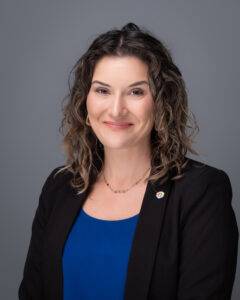
Tory Anchikoski, Thompson Rivers University
 Service Area, campuses and delivery model:
TRU serves much of the southern interior of British Columbia. Our main campus is located in Kamloops and we also serve communities in the Cariboo and the Chilcotin, Clearwater, Lillooet and areas in between. We currently have satellite campuses in Williams Lake, 100 Mile House and Lillooet, but with the current fiscal crises related to drop in international student enrollments, this may change in the near future.
TRU is in the process of approving a new model for types of course delivery. Current delivery methods are mainly of two types: either in person synchronous, or online self-paced. A few courses/programs run outside of these, but they are in the minority. TRU Flex is our soon-to-be-approved new model with a variety of delivery models that provide a spectrum of options with respect to in person/virtual, on-campus/off-campus, and synchronous/asynchronous/self-paced. Some courses and programs will pilot these new delivery models in Fall 2026 and it is expected that all courses and programs may adopt the different delivery styles in Fall 2027.
TRU has been offering upgrading courses in partnership with Tsilhqot’in communities to offer students the opportunity to achieve their Adult Graduation Diploma in their home neighborhoods.
Recent changes in the area/institution:
TRU welcomes a new President, Airini, in summer 2025 and now a new Provost, Gordon Binsted, in March 2026. TRU offered an early retirement incentive program and many faculty will retire in spring 2026, which will definitely change the capacity of the university.
In order to prove solvency and present a balanced budget to the Board of Governors, TRU has gone through some downsizing in the last year. A hiring freeze was implemented and many positions have remained vacant or been eliminated. An early retirement incentive program (ERIP) was offered to all employee groups and many folks took that opportunity. Decrease in student enrollments has trickled down to result in fewer sessional hires. Many CUPE positions were cut, which resulted in a bumping process which took several months. It is expected that TRU will soon go through a reorganization that will reduce the number of faculties. This is part of a cost-saving measure and will be an opportunity to reflect on inter-institutional connections. The new configurations will also reflect the drop in overall number of students. TRU is reimagining itself and how it serves the community and beyond.
Challenges:
As across the country, the drop in income generated by international student enrollments has created a budget deficit. As mentioned above, this has resulted in loss of some positions, early retirements, and bumping. Operating budgets were cut by 10% across the institution for the 2025/2026 fiscal year and we are waiting to see if there are further cuts for the 2026/2027 fiscal year.
With the UEPrep Department, we will lose half of our tenured faculty to ERIP at the end of May and we have concerns about the demands soon to be placed on the remaining department members, as well as about the continued quality of programming and capacity to serve the region.
Innovation/successes:
We are very pleased to be wrapping up some year-long programming in the Tsilhqot’in. Many students there and in the Lillooet area will be receiving their AGD and we are pleased to recognize this important achievement, for the individuals and their communities.
We were pleased to offer intermediate, advanced and provincial English to the community of Yunesit’in, within the Tsilhqot’in Nation, using entirely Indigenous literature, with the majority of the reading material coming from Tsilhqot’in authors. A big thank you to instructor Doug Knowles for working on this.
We have several department members working on developing OERs – some in math and some in English. As a department, we are committed to lowering costs for our students and to sharing these resources widely, particularly in BC and in the sphere of ABE.
Surrey Delta
Roberta Power

Service area, campuses, and delivery model
Adult education in the Delta–Surrey region is delivered through a combination of school district adult education centres and community-based language providers. In Delta, Delta Community College (North Delta) and Delta Manor Education Centre (Ladner) provide adult foundations, high school completion, and LINC programming. Delivery includes in-person classes across morning, afternoon, and evening blocks, as well as flexible options such as Delta Individualized Adult Learning (DIAL) and other computer-supported and online learning opportunities. In Surrey, adult education is delivered primarily through Invergarry Adult Education Centre and Queen Elizabeth Continuing Education. Invergarry offers a range of programs including literacy and English language learning, as well as pathways toward the Adult Dogwood Diploma. Queen Elizabeth Continuing Education focuses on academic upgrading, particularly Grade 11 and 12 courses, delivered in-person through afternoon and evening classes. Across both Delta and Surrey, adult education programs offer flexible delivery options, including in-person, computer-supported, and online learning, such as Delta Individualized Adult Learning (DIAL) and Surrey’s online learning program (SAIL). LINC and ESL programming are also delivered through both school district sites and community providers such as DIVERSEcity, creating a multi-entry, multi-provider system for adult learners.
Recent changes in the area/institution
IRCC has announced reductions to settlement funding tied to lower newcomer targets, impacting LINC programming across the region. These reductions are reflected locally in Contribution Agreement funding decreases, resulting in fewer available classes and a shift in focus toward lStage 1 language instruction (CLB 1–4), with higher-level classes being reduced, transitioned, or cut altogether. More broadly, school districts in both Delta and Surrey are operating within tighter budget environments for 2025–26, contributing to cautious program planning and service adjustments.
Challenges
Significant reductions in IRCC funding are requiring programs to scale back language classes, meaning some learners may not be able to access services. Programs are facing difficult decisions around class reductions, staffing, and prioritization of lower-level learners. Waitlists and limited access to higher-level language instruction (CLB 5–8) have been persistent challenges in the region and are now being further constrained due to recent funding cuts. Ongoing school district budget pressures are limiting program expansion and flexibility. Learners with complex needs (e.g., balancing work, childcare, and study) may face increased barriers if fewer flexible or evening options are available.
Innovations and successes
The region continues to offer a strong mix of delivery models, including in-person, self-paced, and online learning, supporting diverse learner needs. Clear differentiation of program roles supports learner progression. Flexible learning options, including online and computer-supported approaches, provide increased access for adult learners.
Strong integration between adult education and settlement services allows learners to move between ESL/LINC and academic upgrading pathways. Community-based delivery models continue to support a wide range of learner goals, including employment readiness and life skills.
Anything else
The Delta–Surrey region serves a diverse adult learner population, including newcomers, English language learners, and adults seeking high school completion or career pathways. There is an increasing emphasis on linking adult education to workforce readiness and further training opportunities. Despite funding pressures, the region maintains a relatively comprehensive adult education ecosystem with multiple entry points and pathways. Continued collaboration between school districts, settlement agencies, and community organizations remains critical to meeting learner needs.
Kootenay/Boundary
Allison Platt
Service area, campuses and delivery model:
Selkirk: West Kootenay & Boundary Region
Campuses in Castlegar, Grand Forks, Nelson and Trail with touch points in Kaslo and Nakusp. In-person, online, hybrid, hyflex, remote.
College of the Rockies: East Kootenay Region
Campuses in Cranbrook, Fernie, Creston, Invermere, and Golden.
In-person, hybrid, and online asynchronous course offerings at all campuses. Lab sciences and Provincial math are offered in-person and asynchronously at the regional campuses. Synchronous, in-person lab sciences and Provincial math courses are only offered at the Cranbrook campus. Cranbrook, Fernie, and Creston, currently offer Summer upgrading courses as well.
Recent changes in the area/institution:
Selkirk: Selkirk College’s new strategic plan was released one year ago, a 15-year vision to be Canada’s destination for applied learning and inquiry grounded in a sense of land and place. Following that, this fall saw a major brand refresh and a new Strategic Enrolment Management plan launched, both intended to facilitate realizing the strategic plan through significant domestic full-time enrolment (FTE) growth. New student housing on both Silver King (Nelson) and Castlegar campuses, although not without challenges, is filling up.
As a small rural college, the impact of IRCC’s changes has significantly impacted enrolment and budgets, resulting in changes across the institution. Many areas have experienced staff layoffs and some programs have suspended enrolment. In an effort to consolidate facilities, three centres have closed, including the rural learning centres in Nakusp and Kaslo, following over 50 years of providing upgrading and continuing education in those communities. Recently, the college also announced closure of our Victoria Street Campus and suspension of enrolment for the working artist certificates offered there. No new construction is planned at Selkirk College, although some facilities will be reconfigured or refreshed. Moving to a Learning Commons model for student support on all campuses will, for example, reduce service duplication and make a wider array of supports available to more students. All that said, Selkirk did land a balanced budget last year.
College of the Rockies:
The recent changes implemented by IRCC have significantly impacted our small rural College. Though our dependence on International students has been low relative to most other BC institutions (<10% FTE), we are still feeling the effects of decreased enrolment and budgetary constraints. Two programs with high International enrolment, Hospitality Management Diploma and Tourism Management Diploma, are no longer accepting applicants and has been suspended. The English Language Program was suspended in a previous year. The Post-Degree Diploma in Sustainable Business is also experiencing low enrolment due to declining International applications. The Education and Skills for Employment Program is also not being offered at this time.
Challenges:
Selkirk:
Over the past year, budget challenges led to a reduction of 41.8 (~10%) full-time equivalent positions from all employee groups across the college, occurring through layoffs, contract non-renewals, early retirements, voluntary work reductions and decisions to not backfill vacant positions. Work looks different in many areas this year.
The School of Academic Upgrading and Development saw one retirement last spring, along with 3 upgrading instructors opting for severance, which although helpful in avoiding layoffs, is a loss we all feel. Some folks also took a voluntary workload reduction. As a result, instructional staff is reduced, but there were no layoffs in AUD for 25-26. However, we are currently awaiting the results of the latest canvas and decisions for moving forward and there may be layoffs.
Two learning centres have closed, meaning the 50-year tradition of centre-based delivery of upgrading in Nakusp and Kaslo has come to an end.
Recently, the college also announced closure of our Victoria Street Campus and suspension of enrolment for the working artist certificates offered there.
College of the Rockies:
The semestered vs. Directed Studies “problem”:
ABE students often show interest in courses but experience a disconnect with course requirements, leading to low completion rates. Many underestimate the time, effort, and support required to be successful, resulting in unrealistic expectations about completion timeframes. First-attempt success rates are low, with learners frequently needing second or third attempts, highlighting the need for increased instructional input and ongoing support.
Semesterized instruction typically results in higher success rates due to a structured schedule, consistent routines, and more focused instructional support. In contrast, directed studies often lack this regular structure and accountability, which can reduce learner engagement and persistence.
Innovations/Successes:
Selkirk:
To continue offering upgrading in Nakusp and Kaslo, we are experimenting with an instructor going once a week to each community to meet learners in a drop-in, hot-desk format in hopes of continuing to serve these communities.
Three Pathways programs were funded this year: Pathway to STEM careers; Pathway to Health and Human Services; Pathway to Rural Careers. These programs are now bringing over 90 students a year in to prepare them for successful application and progress in education programs for high demand careers.
In an effort to continue to make upgrading widely available, many courses are being delivered region-wide, using online strategies and supported by local instructors.
We used to have an Upgrading Room at each location and we are moving to a Learning Commons model for student support on all campuses with the hope that this will reduce service duplication and make a wider array of supports available to more students.
College of the Rockies:
An increased focus on learning management systems, such as Moodle, has enhanced students’ ability to access and engage with course materials at their own pace. Greater integration of these platforms enriches the overall learner experience by supporting flexible and self-directed learning.
Additionally, pathway programs are being developed to support student progression. The alignment of COMP 90 with the Computer Information Systems Technology program, as well as a new Cybersecurity program, has the potential to reduce barriers to entry into these high-demand fields. In addition, a cohort-based pathway program is being developed for students interested in entering the Practical Nursing (PN) program.
Anything else:
Selkirk:
Within our new Learning Commons, students have access to pods that provide a quiet space for studying. These pods are a great success with daily use by many students. Feedback from students indicate they are able to improve their focus and complete more studying when in the pod. Neurodiverse students have also openly shared the huge difference the pods have made in helping them be more successful in their courses through use of the pods.
College of the Rockies:
Students registered in Directed Studies courses enjoy the benefits of self-paced learning, many of which are equivalent to some of the common accommodations through Accessibility Services. These include a quiet space to learn, one-on-one supports, breaks, flexible timelines and extensions, ability to repeat assignments/assessments/tests, etc. Paired with a flexible classroom schedule, these factors really support our adult learners who have experienced barriers to their education.