
2 Centering Relationships for Wellbeing: It Starts with Love at the Root
By Chelsea Corsi (she/her/elle), Senior Wellness Coordinator, Thompson Rivers University
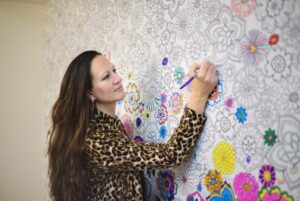
As I sit here and start to write this, I am looking out the window admiring the beautiful lands of the Tk’emlúps te Secwépemc within Secwépemcúl’ecw, the stolen territory of the Secwépemc people. The warmth of the sunshine hits my face through my tearoom window, slowly spreading across my body, down to my heart. I am overcome with an immense feeling of gratitude for the many Secwépemc mentors in my life who have helped shape me into the person I am today. I am also grateful for the Indigenous families and colleagues in other neighbouring territories for their willingness to open their hearts and spirits to me as they have shared their struggles and joys, laying foundational connections and relationships that have influenced how I live my life and how I show up each day to work with student learners. Their care, love, generosity, and gifts of knowledge, wisdom, and friendship have wholeheartedly nurtured my learning and unlearning, my growth, and my wellbeing.
The myriad of connections and relationships I have made in my own years as a student, as a nurse, and as a faculty member have also influenced the ways in which I approach my work, approach my relationships teaching and mentoring students, and influence the way I speak about health and well-being within a campus community. In the beginning I put a lot of pressure on myself to be a perfect model of self-care and wellbeing because I was the ‘Wellness Coordinator’ after all. However, what I know to be true for me is that after 23 years as a nurse and almost 22 years as a wellness coordinator, perfection isn’t the goal; the goal is to little by little, put one foot in front of the other and do my best to honour myself by attuning to my wellbeing while caring for the people around me; being a conduit of love and gratitude. And…when I get too tired and overwhelmed and feel like I just need five minutes, binge watching Bridgerton on Netflix is a great choice too.
The first time I realized I wanted to work with adult learners, I was 20 years old. It was 1997 and I was a residence advisor (RA) at the University of British Columbia (UBC). I was there completing my degree in animal biology thinking that I wanted to go to medical school and become a doctor. When I was eight years old my aunt, who was only 25, died suddenly of an acute brain illness, and I thought if I was a doctor, I could prevent that from happening to anyone else. Not that I was truly inspired by the idea of going to med school, but at the time I thought it was THE way to support the health and wellness of others. All that changed, however, after meeting with a registered nurse from Planned Parenthood (now Options for Sexual Health). I was the lead RA coordinating our annual Intimacy Week education series, and after meeting with her I was inspired by the power of health promotion and the breadth and depth of a registered nurse’s scope of practice. I coordinated the first contraception and the first “choose your own condom adventure” educational events that were ever hosted at any UBC residence. I quickly learned that designing and implementing health promotion learning experiences for university students could foster their literacy, skills, and application of knowledge, and I wanted in! Talking to a truly engaged 20-year-old male student about his partner’s birth control pills and the questions he had about them was a dream come true! In that week, the brief yet meaningful connections I made with students felt like home.
I knew that I wanted to support students to learn, to grow, and to discover who they are as human beings in this world. To offer them opportunities to question their biases, support them when they are feeling overwhelmed and disconnected, and provide them with evidence-informed health and wellness information so they can navigate their health independently with a sense of competence and insight. I have learned that I am a prevention girl after all, and for me, building trusting relationships with student learners would fill my bucket much more authentically than being a physician ever could. So I did what any wise woman would do, I finished my degree then started a new one to become a registered nurse!
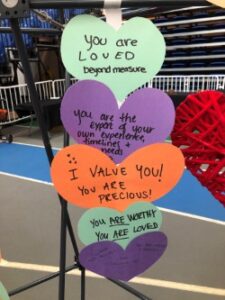 My dream of working as a health and wellness educator with students was realized in 2004 after I was hired into an instructional support faculty role as the first Wellness Coordinator at Thompson Rivers University (TRU). Like your work in Adult Basic Education (ABE), it is much more than teaching and supporting student learning; based on the reciprocal relationships we cultivate with students, we often become their trusting connection point on campus; the person that they can truly be vulnerable with by bravely sharing their stories. We have the privilege of learning about their challenges and struggles first-hand, and often we are the ones that go that extra mile to spend the time, the time we often don’t really have, to meet them where they are at; to listen, to validate, and if they consent, to try and connect them with resources and supports that could be life enhancing or life changing for them.
Sometimes I’m curious about why I chose to work in academia; not because I don’t love the energy or pace of a university environment, but I recognize that not everything that happens in academia aligns with who I am at my core. In her book ‘Rest is Resistance: A Manifesto’, author Tricia Hersey talks about ‘grind culture’ as an act of oppression. Grind culture wants us to produce, achieve, and win those medals and awards to prove our worth; to show our value. Academia can imbibe the tenets of grind culture as it rewards over-work, awards, achievements, research grants, etc., yet it doesn’t always acknowledge or reward the care, compassion, emotional energy, or spiritual cost to showing up each and every day ready to meet students where they are at in an attempt to support their all-round success and wellbeing. The social and emotional intelligence required to be a faculty member who strives to make meaning in the lives of others is more difficult to acknowledge or fully articulate in my APAR (our TRU faculty academic/professional activity report) and there is no SSHRC (Social Sciences and Humanities Research Council) grant for that! At least I haven’t heard of one…if there is one please let me know because I would like to apply for it.
I am also a qualitative girl…stories and people’s experiences mean more to me than the gathering and use of quantitative data to determine credibility or worthiness. Not that we don’t need all ways of knowing and a variety of pedagogical frameworks to develop shared understanding, however it’s often the quantitative work that is prized and valued over the rich stories of people’s life experiences. Academia can also be quite ego-driven at times; there can be a calculated focus and attention on that grind culture philosophy where overwork is expected, and the achievements and/or awards people win are more highly prized and valued over the heart-work we do day in and day out – the creative, insightful, person-centered, strengths-based care and support we provide students that can actually boost their wellbeing and keep them from dropping out of school altogether. Too often I have found this disconnect in espoused versus realized values difficult and frustrating; in my opinion if we want to create a stronger sense of belonging and wellbeing in the post-secondary environment to meet the ever declining mental health and wellbeing of our campus community members, including our own health and wellness as educators, academia needs to fundamentally rethink its emphasis on “what did you win/achieve/accomplish?” and substitute that with “wow…I see who you are. I see how your skillful teaching is providing exceptional educational opportunities for students, whilst also going above and beyond in your role by being a trusted and caring support for them as they navigate their life as a student who might be struggling with ___ ” …insert any of the following – mental health, suicidal thoughts, loneliness, homesickness, grief and loss, finances, food security, relationships, trauma, sexualized-violence, impacts of colonization, new learning challenges/learning disabilities, family responsibilities, racism, misogyny, etc.; the list could go on.
This is not to say I don’t honour awards or recognition. People have worked hard to earn those accolades, and truthfully, as a “people-pleaser in recovery” I regularly check my own ego as I can also get that dopamine hit from receiving external validation. In the critical reflections and curiosities that are always running back and forth through my mind, I continually ask myself: How do I stay true to my spiritual, soulful self when the academic culture can prioritize a more quantitative, results-based, and ego-driven existence? How do I find joy in my work when it might not always be understood or prioritized? How can I continue to purposefully and intentionally pour my heart into establishing and maintaining authentic and meaningful relationships with myself, students, and colleagues that come from a place of love and care, when I can’t always articulate the impact of that love on an operational report? How do I attune to my health and wellbeing within the work, whilst journeying through my own stress, family struggles, and aging? How can I keep giving my energy, spirit, and love to an institution when it doesn’t always love me back?
I’m entering my 50th year soon, and as I look back on my own personal and career growth, I acknowledge that who I am today has been deeply influenced by my loving and reciprocal relationships with myself and others, and the relationship I nurture with my spiritual and connected part of the world. I have grown and continue to grow and flourish in community.
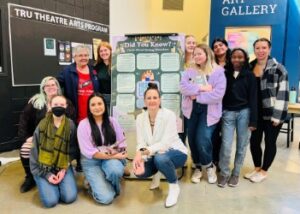 All of us who work in ABE have an opportunity to be that support, that caring point of contact, that warm hug, that empathetic kind word that is rooted in love. Now some people might be uncomfortable with this philosophy and say it’s inappropriate to love students or to bring love into the workplace, but to me, it’s how I live my life. Love is boundless, love is endless; within this ideology it is also crucial that we remember to love ourselves by fostering our self-compassion, our spiritual growth, and our connection to ourselves. Often, it’s difficult. We have so many priorities that continually bombard us and challenge us to grow and learn and, unfortunately these “growth opportunities” are often not the most comfortable…they are actually quite a pain in the ass. To help ourselves grow spiritually and connect with our joy, often we must engage with discomfort; walk through painful experiences, painful decisions, and painful unexpected situations that challenge us to think, to problem-solve, to be vulnerable, and to be courageous.
The gift that working in academia has given to me is to show me that students are paying attention. They pay attention to how we show up for ourselves and how we show up for them; this matters and makes a significant impact. The countless brave and courageous conversations I’ve had with students in the past 21 years has truly shaped me into the person I am today. I am eternally grateful that I have had the privilege to learn just as much or more from them as they have learned from me; it’s through their strength, courage, and vulnerability that I’ve been able to grow and manifest more confidence in my practice to be a better nurse, leader, mentor, and wellness coordinator. I’ve grown to be a better parent and a better human being. I have also directly mentored hundreds of students in my 21 years at TRU, most specifically for the last 11 years overseeing and coordinating the Student Wellness Ambassador Team (SWAT), a group of amazing student leaders who support the health promotion and population health work on campus. Within our team environment, deep relationships develop through a focus on respect, kindness, care, and love. We model, compassion, strength, and growth, including that it’s OK to make mistakes. We talk about how sometimes things don’t always unfold how we had initially planned, however we can reframe the barriers we are facing by recognizing that plan B can be a great option too. It doesn’t mean that we’re not meant to achieve the goal we have our heart set on, but maybe we have a different journey to get there.
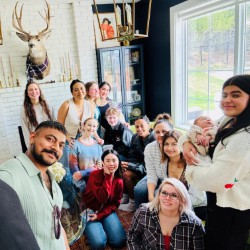 I know that these loving and caring relationships matter and make a difference, because students tell me they do. With permission from students, here are excerpts shared with me by two SWAT Leaders from their 2025 winter semester reflections as they answered the question “Reflecting on your experience of being a SWAT Leader, what are your top three takeaways from this experience?”:
“Love can be part of how I approach my work and the communities I’m part of. I kind of mentioned this above, but I have learned that love is not just for family and romance; I can genuinely put my heart into my work and the people I work with, and it’s ok to think of it as love.”
SWAT Leader, 2025
“1) I’ve learned that vulnerability can be a superpower when held with intention. This role taught me that the most powerful kind of leadership is gentle, relational, and rooted in compassion and kindness. 2) Community changes everything. Real, honest, imperfect connection – with students, peers, and mentors, has shaped every part of who I am today. Whether it was through one-on-one conversations, group facilitation, or quiet support behind the scenes, this role reminded me that healing is often a collective process. And that we grow faster when we grow together. 3) This semester especially reminded me that I don’t have to be perfect to be impactful. That even when things are hard, especially when things are hard, showing up with integrity and accountability matters, as well as being forgiving to yourself and others. I found the courage to keep going, to love myself through failure, and to rise again. That’s a lesson I will take with me forever.”
SWAT Leader 2025
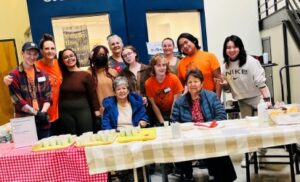
Yes, I needed a Kleenex box when I read these comments; and yes my heart grew three times its size in response to these reflections, as they demonstrated how my intention of co-creating a loving and caring team environment that can genuinely make a difference was realized.
Right now, the world is overwhelming. Many of us are struggling with a decrease in our mental health and resilience, finances, job security, the political stage around the world, the erosion of human rights…I could go on…and sometimes it is all too much. I never center myself as an expert, and my joke is that “I know a few things about a few things” (and that changes when I learn something new), however, through my experience I have learned that I could produce a list of a million ideas to help support someone’s wellbeing, but at the end of the day, it doesn’t really matter what I say, it is what is important to them that matters most. So if you are still reading this, I ask you to reflect for yourself and consider: What brings you joy and fills your bucket? How is your mental health and wellbeing? Do you need to start making more time for your health and wellness, and if so, what is a small action you can take to start honouring those parts of yourself? How can you strategically and intentionally focus on your health, when you might work within a system that prioritizes grind culture and rewards overwork? How comfortable are you at setting and maintaining boundaries? Are you living your life through a lens of love and abundance, and if not, what might happen if you tried?
While boundary setting is important to maintaining our wellness, I acknowledge and recognize that setting boundaries and making ourselves a priority can be risky, especially in the current post-secondary environment. What I hope my thoughts have offered here is an opportunity for you to practice some self-reflection and acknowledge that you and the work you do matters. You are making a significant and impactful difference in the lives of students, regardless of the recognition. I also hope you realize that building nurturing and loving relationships with yourself, your colleagues, and the students who you work with are worth it. It is through these connections that we can grow and flourish in our own health and wellbeing as well. I mean Harvard has got to know a few things about a few things too, and according to their longest running research project ever, one that spanned over 84 years, the secret to lifelong well-being is the strong, loving, and reciprocal relationships in our lives! Let’s be honest, there is no AI for that, so even though it can be hard, I hope you keep showing up with your heart and your spirit because it truly does matter!
.